
Minimally Invasive Cardiac Surgery in Kadapa
The phrase "heart surgery" tends to bring up images of long incisions and lengthy hospital stays, but a large share of cardiac procedures today don't require open-heart surgery at all. Minimally invasive cardiac surgery in Kadapa, performed through small catheter-based access rather than a large chest incision, has become the standard first approach for many blocked artery and structural heart conditions.
At Arunachala Hospital, our interventional cardiologist, Dr. Niranjan Reddy Reddeppagari, MBBS, MD, DNB, DM (Cardiology), specializes specifically in these minimally invasive, catheter-based techniques, aiming to treat serious heart conditions with smaller incisions and significantly shorter recovery time. You can learn more about our interventional cardiology services on our Services Page.
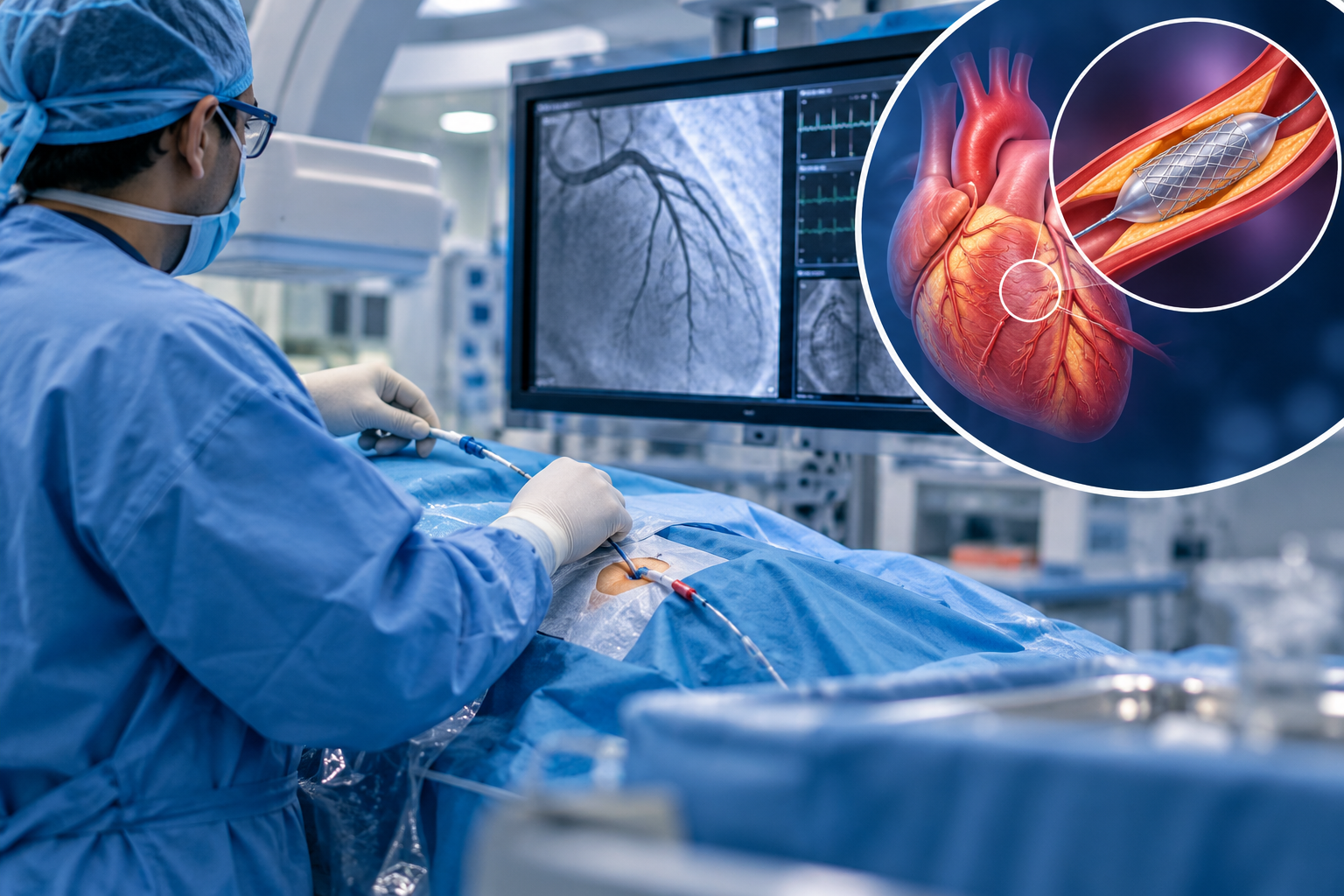
Rather than opening the chest, these procedures are performed through a small catheter typically inserted through the wrist or groin, guided to the heart using real-time imaging. This approach is used for a wide range of conditions, from blocked coronary arteries to certain structural heart abnormalities.
What Counts as Minimally Invasive Cardiac Surgery
Catheter-based cardiac procedures have transformed how many heart conditions are treated, reducing the need for traditional open-heart surgery in a growing number of cases. According to the American Heart Association, minimally invasive and catheter-based interventions can offer outcomes comparable to open surgery for many patients, with the added benefit of reduced recovery time and lower procedural risk in appropriately selected cases.
Minimally invasive cardiac surgery in Kadapa typically refers to procedures performed through small catheter access points rather than a full chest incision, including angioplasty, stenting, and certain structural interventions, guided by live imaging throughout the procedure.
Procedures We Perform
Our catheterization lab supports a range of minimally invasive interventional procedures for both diagnosis and treatment.
Coronary Interventions
- Coronary angiography for diagnostic imaging of blocked arteries
- Balloon angioplasty to reopen narrowed or blocked coronary arteries
- Coronary stenting to keep arteries open after angioplasty
Structural and Rhythm Procedures
- Pacemaker implantation for slow or irregular heart rhythms
- Balloon valvuloplasty for certain narrowed heart valves
Why Minimally Invasive Technique Matters

Traditional open-heart surgery requires a large chest incision, a longer hospital stay, and a recovery period that can extend well beyond a month. Catheter-based procedures, performed through a small access point, typically involve a much shorter hospital stay, less post-procedural pain, and a faster return to normal daily activity for suitable candidates.
Not every cardiac condition is a candidate for a minimally invasive approach, and Dr. Niranjan Reddy evaluates each case individually through diagnostic imaging and clinical assessment before recommending the appropriate treatment path.
Why Choose Arunachala Hospital in Kadapa
Performing minimally invasive cardiac procedures safely requires more than the right equipment; it requires an experienced interventional cardiologist and a team trained to respond quickly if a case requires escalation. At Arunachala Hospital, our catheterization lab is equipped for both diagnostic and interventional cardiac procedures, backed by continuous cardiac monitoring.
We evaluate every patient thoroughly before recommending a procedure, ensuring that a minimally invasive approach is genuinely the right fit for that individual's specific cardiac condition rather than a default recommendation.
How Timely Intervention Prevents Complications
Blocked coronary arteries and certain structural heart conditions tend to worsen gradually, often without symptoms severe enough to prompt an immediate visit. Delaying evaluation allows these conditions to progress, sometimes to a point where a minimally invasive approach is no longer sufficient and more extensive surgery becomes necessary.
Seeking evaluation for minimally invasive cardiac surgery in Kadapa promptly, once symptoms like chest discomfort or breathlessness appear, gives Dr. Niranjan Reddy the best opportunity to intervene early using a less invasive approach.
Our Standards of Procedural Safety
Every catheter-based procedure is performed under strict sterile protocols, with continuous cardiac monitoring throughout. Our catheterization lab supports real-time imaging to guide precise catheter placement, minimizing risk during both diagnostic and interventional procedures.
Post-procedure recovery is closely monitored, with patients observed for a period appropriate to the specific intervention performed before being cleared for discharge or transitioned to a structured follow-up plan.
Making Cardiac Screening Part of Your Routine
Many candidates for minimally invasive cardiac procedures are identified through routine cardiac screening before symptoms become severe. We encourage patients over 40, or those with risk factors such as diabetes, hypertension, or a family history of heart disease, to schedule regular cardiac evaluation.
For patients who have already undergone a minimally invasive procedure, consistent follow-up appointments help our team monitor long-term outcomes and catch any recurring issues early.
How to Plan Your Visit with Us
Getting evaluated for minimally invasive cardiac surgery at Arunachala Hospital starts with a consultation with Dr. Niranjan Reddy. Our Kadapa facility is equipped to handle diagnostic imaging, catheter-based intervention, and post-procedure follow-up in one location.
For patients bringing prior cardiac test results or imaging, we recommend sharing those reports at your first visit so our team can review your case thoroughly before recommending next steps.
Conclusion
Many cardiac conditions once treated exclusively through open-heart surgery can now be managed through minimally invasive, catheter-based techniques, offering a faster recovery without compromising outcomes for suitable candidates. At Arunachala Hospital in Kadapa, Dr. Niranjan Reddy and our interventional cardiology team are committed to evaluating each case carefully and recommending the safest, least invasive effective treatment path.
If you're exploring minimally invasive cardiac surgery in Kadapa, we invite you to schedule a consultation with our cardiology team today.