


Kidney Failure Treatment in Kadapa
Kidney failure rarely arrives without warning, but the warning signs, fatigue, swelling, changes in urination, are easy to dismiss until kidney function has already declined significantly. Finding the right kidney failure treatment in Kadapa early can slow that decline, delay the need for dialysis, and in some cases prevent complications that are far harder to manage once kidney function drops further.
At Arunachala Hospital, our nephrology department is led by Dr. M. Sohail Malik, MBBS, MD (General Medicine), DrNB (Nephrology), a Consultant Nephrologist and Transplant Physician with over 8 years of clinical experience treating both acute and chronic kidney conditions. You can explore our full nephrology and dialysis services on our Services Page.
Kidney failure treatment isn't a single intervention, it's a spectrum of care that shifts as kidney function changes over time, from lifestyle and medication management in early stages to dialysis or transplant coordination once kidney function has declined significantly.
Understanding the Stages of Kidney Failure
Chronic kidney disease is typically classified into five stages based on how well the kidneys are filtering waste from the blood. According to Kidney Disease: Improving Global Outcomes (KDIGO), early identification of declining kidney function, well before symptoms become obvious, is one of the most effective ways to slow disease progression through timely medical and lifestyle intervention.
Kidney failure treatment in Kadapa is most effective when it starts early, since the initial stages of chronic kidney disease often respond well to medication, dietary changes, and careful management of related conditions like diabetes and high blood pressure, both major contributors to kidney decline.
Treatment Options Across the Stages of Kidney Failure
Dr. Sohail Malik's approach to kidney failure treatment is built around matching the intervention to the stage of kidney function, rather than applying the same treatment regardless of severity.
Early and Moderate Stage Management
- Blood pressure and blood sugar control to slow disease progression
- Dietary counseling focused on protein, sodium, and potassium intake
- Regular monitoring of kidney function and related blood markers
- Medication adjustment to reduce strain on declining kidney function
Advanced Kidney Failure Management
- Dialysis initiation, including hemodialysis and peritoneal dialysis
- Management of complications such as anemia and electrolyte imbalance
- Evaluation and coordination for kidney transplant candidacy
When Dialysis Becomes Necessary
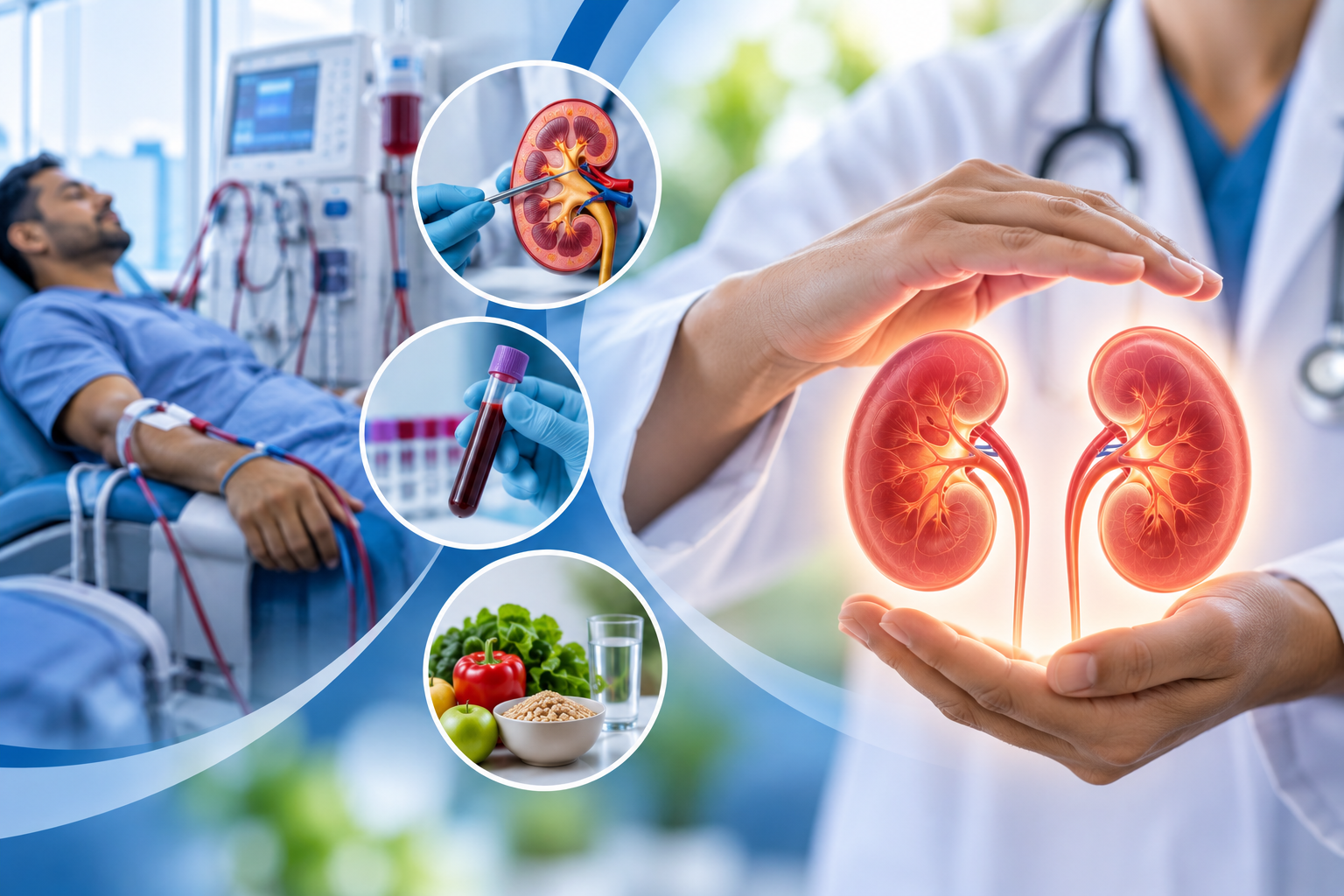
Not every patient with declining kidney function needs dialysis immediately, but once kidney function drops to a critical level, dialysis becomes necessary to perform the filtering work the kidneys can no longer manage. Our nephrology team monitors kidney function closely so that the transition to dialysis, when needed, happens in a planned way rather than as an emergency.
Dr. Sohail Malik's experience spans both hemodialysis and peritoneal dialysis, allowing treatment plans to be tailored to what genuinely suits each patient's lifestyle and medical needs rather than defaulting to a single approach.
Transplant Evaluation and Coordination
For patients whose kidney failure has progressed to end-stage disease, kidney transplant may offer the best long-term outcome. As a Transplant Physician, Dr. Sohail Malik supports patients through pre-transplant evaluation and post-transplant management, working alongside broader transplant care coordination as needed.
Transplant isn't the right path for every patient, and eligibility depends on overall health, donor availability, and individual medical factors that our nephrology team evaluates carefully before recommending this route.
Why Choose Arunachala Hospital in Kadapa
Kidney failure treatment often unfolds over years, not a single visit, which makes continuity of care especially important. At Arunachala Hospital, patients seeking kidney failure treatment in Kadapa are cared for by the same nephrology team across every stage, from initial diagnosis through medication management, dialysis initiation, and transplant evaluation if needed.
We also coordinate closely with other departments when kidney failure is linked to related conditions such as diabetes or cardiovascular disease, ensuring treatment addresses the underlying contributors, not just kidney function in isolation.
How Early Intervention Changes Outcomes
Patients who begin treatment in the earlier stages of kidney failure often see meaningfully slower disease progression than those who begin care only after symptoms become severe. Consistent monitoring and early medication adjustment can, in many cases, delay the need for dialysis by months or years.
This is why timely kidney failure treatment in Kadapa matters, and we encourage patients with risk factors such as diabetes, high blood pressure, or a family history of kidney disease to seek nephrology evaluation proactively, rather than waiting for symptoms like swelling or fatigue to appear.
How to Plan Your Visit with Us
Getting evaluated for kidney failure treatment at Arunachala Hospital starts with a nephrology consultation, including blood and urine testing to assess current kidney function. Our Kadapa facility is equipped to handle ongoing monitoring, dialysis, and transplant evaluation under one nephrology team.
For patients bringing prior kidney function test results, we recommend sharing those reports at your first visit so Dr. Sohail Malik's team can track changes over time rather than starting from a single snapshot.
Conclusion
Kidney failure treatment works best as an ongoing, evolving process, not a single intervention, adjusting as kidney function changes over time. At Arunachala Hospital in Kadapa, Dr. M. Sohail Malik and our nephrology team support patients through every stage, from early management through dialysis and transplant evaluation when needed.
If you're searching for kidney failure treatment in Kadapa, we invite you to schedule a nephrology consultation with our team today.