

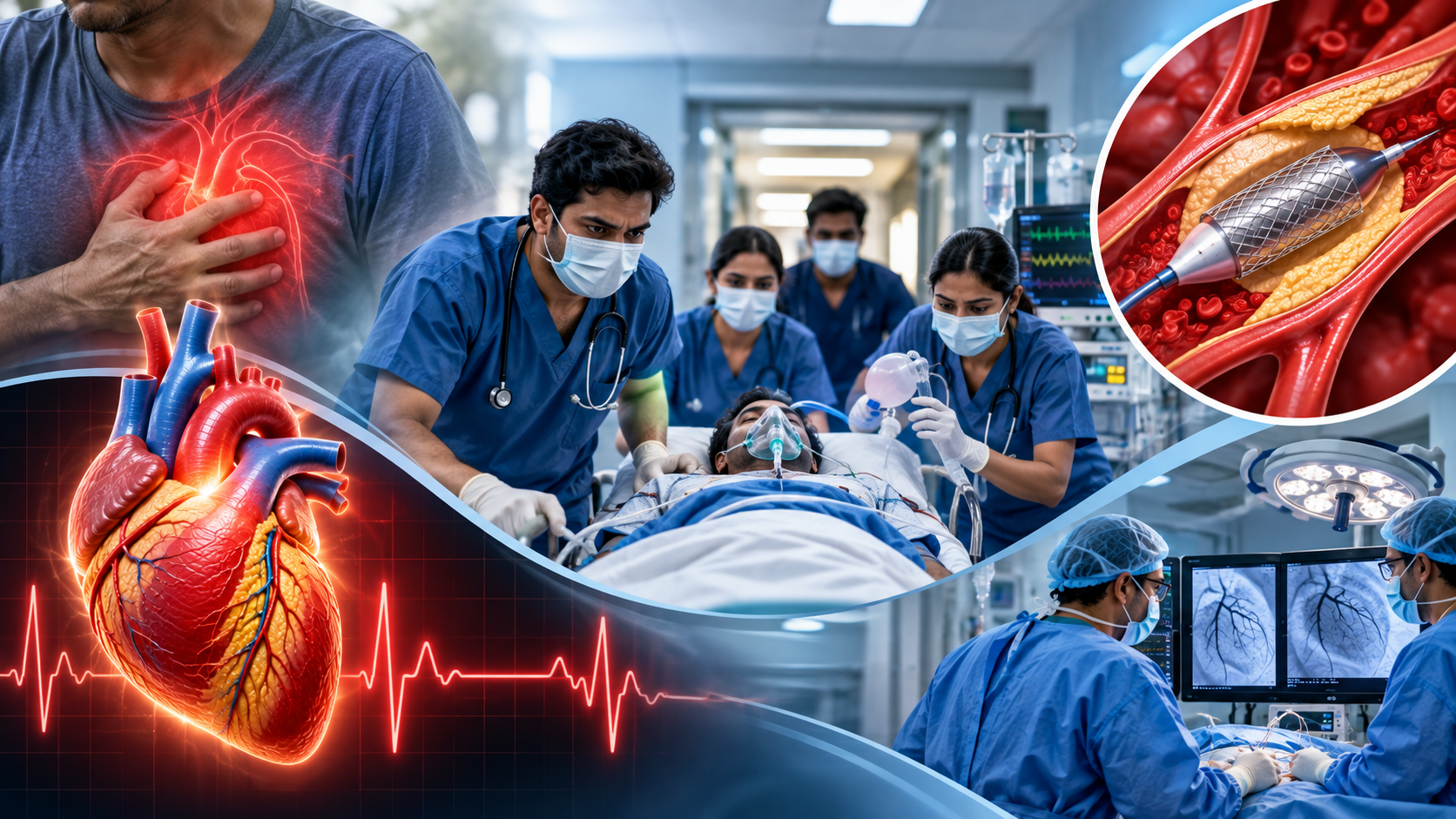
Heart Attack Treatment in Kadapa
During a heart attack, blocked blood flow to the heart muscle causes damage that gets worse with every passing minute, which is why the speed of treatment matters as much as the treatment itself. Heart attack treatment in Kadapa depends on having both rapid emergency response and immediate access to a cardiac catheterization lab capable of restoring blood flow without delay.
At Arunachala Hospital, heart attack cases are managed through a coordinated emergency response, with initial stabilization led by our emergency medicine and critical care physician, Dr. Bala Narasimha Reddy Jammana, followed by urgent cardiac intervention from our interventional cardiologist, Dr. Niranjan Reddy Reddeppagari. You can explore our emergency and critical care services on our Services Page.
This two-part response, rapid stabilization followed by definitive cardiac treatment, reflects how heart attack cases are managed internationally, where every minute of delay in restoring blood flow increases the risk of permanent heart muscle damage.
Recognizing the Warning Signs of a Heart Attack
Getting to appropriate heart attack treatment quickly starts with recognizing the symptoms early. According to the American Heart Association, common warning signs include chest pain or pressure, discomfort spreading to the arm, jaw, or back, shortness of breath, cold sweat, nausea, and lightheadedness, though symptoms can vary between individuals, particularly in women.
If you or someone near you experiences these symptoms, seeking emergency evaluation immediately, rather than waiting to see if symptoms pass, gives our team the best chance to intervene before the heart muscle sustains lasting damage.
Our Emergency Heart Attack Response
Heart attack treatment in Kadapa at our facility follows a structured emergency pathway, designed to move patients from arrival to treatment as quickly as possible.
Initial Stabilization
- Immediate ECG to confirm a heart attack and identify the affected artery
- Continuous cardiac monitoring and stabilization by our critical care team
- Rapid coordination between emergency medicine and cardiology
Definitive Cardiac Treatment
- Emergency coronary angiography to locate the blocked artery
- Primary angioplasty and stenting to restore blood flow
- Post-procedure monitoring in a dedicated cardiac care setting
Why Speed of Treatment Matters

Heart muscle begins to die within minutes of blood flow being blocked, and the longer that blockage persists, the more permanent damage occurs. This is why emergency heart attack treatment prioritizes restoring blood flow as quickly as possible, typically through emergency angioplasty, rather than relying on medication alone.
Our catheterization lab is equipped to perform emergency angioplasty and stenting, allowing Dr. Niranjan Reddy's team to address a blocked artery directly during the acute phase of a heart attack rather than delaying intervention.
Why Choose Arunachala Hospital in Kadapa
Heart attack outcomes depend heavily on how quickly a patient can move from arrival to definitive treatment. Our approach to heart attack treatment in Kadapa is built around minimizing that delay, with continuous cardiac monitoring available throughout stabilization, intervention, and recovery.
We also maintain 24/7 emergency and critical care availability, recognizing that heart attacks don't happen on a predictable schedule and require a team ready to respond immediately, at any hour.
Recovery After a Heart Attack
Recovery following heart attack treatment in Kadapa typically involves a period of monitored recovery in a cardiac care setting, followed by medication management and lifestyle guidance aimed at reducing the risk of a future cardiac event. Patients are also evaluated for underlying risk factors such as high cholesterol, high blood pressure, and diabetes that may have contributed to the event.
Long-term follow-up with our cardiology team helps monitor heart function after a heart attack and adjust treatment as needed to support long-term cardiovascular health.
Reducing Your Risk of a Future Heart Attack
Patients who have experienced one heart attack carry a higher risk of a second event without proper follow-up care. We work with patients on medication adherence, blood pressure and cholesterol management, and lifestyle changes such as diet and physical activity, all aimed at reducing that ongoing risk.
Regular cardiac follow-up after a heart attack allows our team to catch early warning signs of recurring issues before they become another emergency.
What to Do If You Suspect a Heart Attack
If you or someone near you experiences symptoms of a heart attack, seek emergency care immediately rather than waiting or attempting to drive yourself. Every minute matters, and our emergency team is prepared to begin evaluation and stabilization the moment a patient arrives.
For family members, having basic information ready, such as current medications and known medical conditions, can help our team move even faster during the initial evaluation.
Conclusion
Heart attack treatment depends on speed, coordination, and immediate access to definitive cardiac care. At Arunachala Hospital in Kadapa, our emergency medicine and interventional cardiology teams work together to move patients from arrival to treatment as quickly as possible, followed by structured recovery and long-term follow-up care.
If you or a loved one may be experiencing a heart attack, seek emergency care immediately, our team at Arunachala Hospital is available around the clock to help.