
Early Warning Signs of Heart Disease You Should Never Ignore
Don't Ignore What Your Heart Is Trying to Tell You
Imagine climbing a flight of stairs and suddenly feeling tightness in your chest. You stop, catch your breath, and the discomfort disappears. Many people dismiss these symptoms as tiredness, acidity, or stress-but sometimes they can be early warning signs of heart disease.
According to the World Health Organization (WHO), cardiovascular diseases are the leading cause of death worldwide. Recognizing symptoms early and seeking timely medical care can significantly improve outcomes.
Here are ten warning signs that should never be ignored.
1. Chest Pain or Pressure
Chest pain is one of the most common heart disease warning signs, but it doesn't always feel sharp. It may feel like:
- Pressure
- Tightness
- Heaviness
- Burning
- Squeezing
If it occurs during physical activity or emotional stress, schedule an evaluation with a heart specialist.
2. Shortness of Breath
Getting breathless while walking short distances, climbing stairs, or even resting could indicate that your heart is not pumping blood effectively.
If it occurs along with chest discomfort or fatigue, don't delay medical attention.
3. Pain That Spreads Beyond the Chest
Heart- pain may spread to your:
- Left arm
- Both arms
- Neck
- Jaw
- Shoulder
- Upper back
Many people don't realize these symptoms can be related to the heart.
4. Cold Sweats
Sudden cold, clammy sweating without physical activity—especially when combined with chest pain or dizziness—requires immediate medical attention.
5. Unusual Fatigue
Feeling unusually tired for several days or weeks without an obvious reason may be an early symptom of a heart problem, particularly in women.
6. Dizziness or Fainting
Frequent dizziness, fainting, or feeling light-headed may indicate abnormal heart rhythms or reduced blood flow.
7.Rapid or Irregular Heartbeat
Occasional palpitations can happen due to stress or caffeine, but frequent irregular heartbeats with breathlessness, chest discomfort, or dizziness should be evaluated by a cardiologist.
8. Swelling in the Legs or Feet
Persistent swelling in your ankles, legs, or feet may occur when the heart is not pumping blood efficiently.
9. Nausea or Indigestion Along With Chest Discomfort
Heart attacks don't always begin with severe chest pain. Some people experience symptoms that resemble acidity or indigestion.
If these symptoms occur with sweating, breathlessness, or chest discomfort, seek emergency medical care.
10. Reduced Ability to Perform Everyday Activities
If routine activities such as walking, climbing stairs, or carrying groceries suddenly leave you unusually tired or breathless, it's worth discussing with a heart specialist.
A Simple Real-Life Example
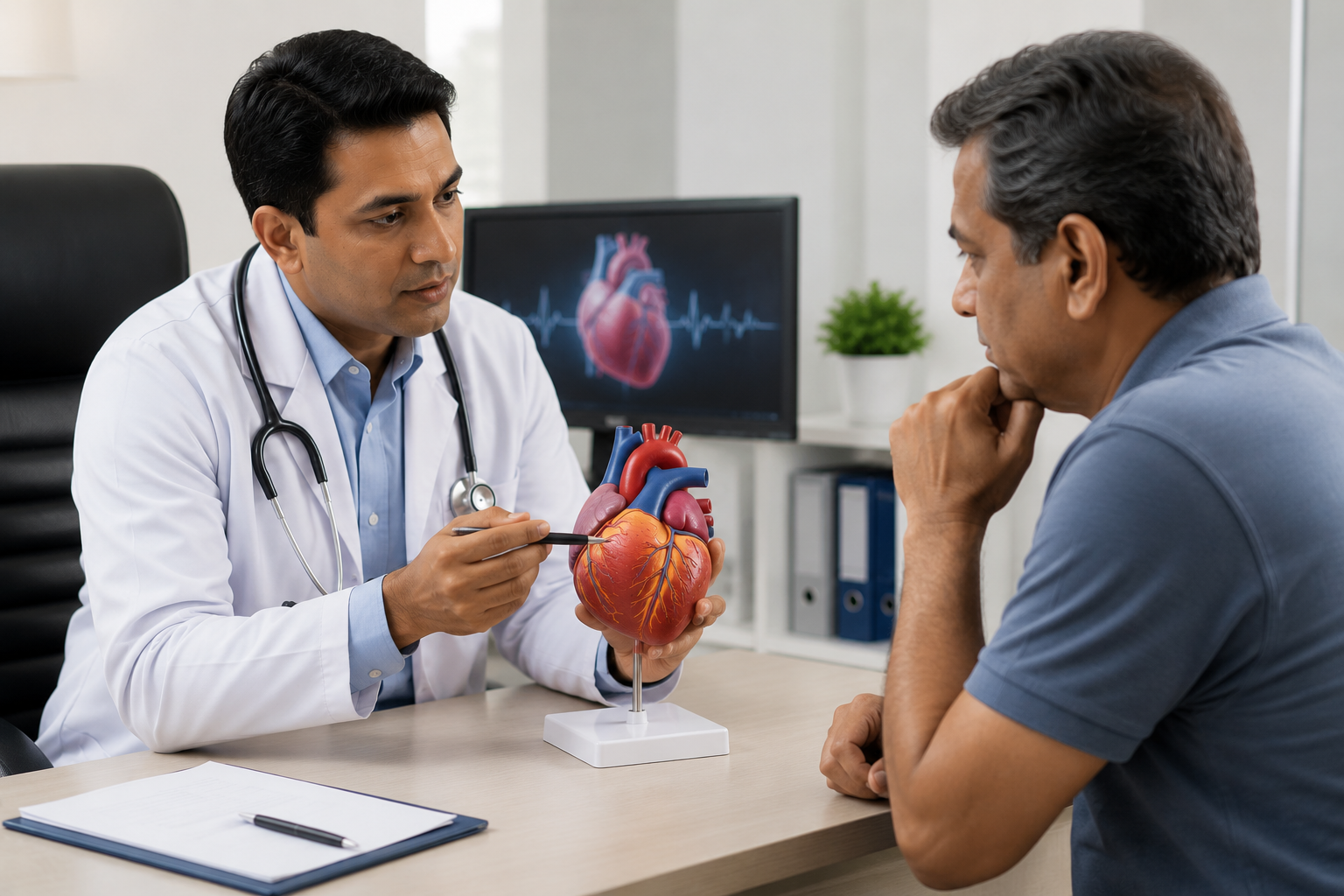
Imagine a 48-year-old office worker who experiences mild chest tightness every time he climbs stairs. Assuming it was just stress, he ignored it for weeks. A later cardiac evaluation revealed blocked arteries that required treatment.
Recognizing symptoms early can help identify heart problems before they become emergencies.
When Should You Seek Emergency Medical Care?
Seek immediate medical attention if you experience:
- Severe or persistent chest pain
- Chest pain spreading to the arm, neck, jaw, or back
- Shortness of breath with chest discomfort
- Sudden fainting or collapse
- Cold sweats with chest pain
Early treatment can save lives.
How to Keep Your Heart Healthy
Simple habits can reduce your risk of heart disease:
- Eat a balanced diet
- Exercise regularly
- Avoid tobacco
- Control blood pressure, cholesterol, and diabetes
- Maintain a healthy weight
- Get regular health check-ups
Preventive care is one of the best ways to protect your heart.