


Coronary Artery Bypass Surgery in Kadapa
When coronary artery disease has progressed to multiple blocked vessels, medication and stenting alone may no longer be enough to restore proper blood flow to the heart. Coronary artery bypass surgery in Kadapa becomes the recommended path in these cases, rerouting blood flow around blocked arteries using a healthy vessel taken from elsewhere in the body.
At Arunachala Hospital, our Cardiovascular Surgery department provides coronary artery bypass grafting, commonly known as CABG, for patients with multi-vessel coronary artery disease. You can explore our full range of cardiovascular surgery services on our Services Page.
CABG is performed by our cardiac surgery team using both on-pump and off-pump techniques, selected based on each patient's specific anatomy and risk profile. The surgical team works closely with our interventional cardiology department, led by Dr. Niranjan Reddy Reddeppagari, DM (Cardiology), so that patients receive coordinated care from initial diagnosis through surgery and recovery.
What Coronary Artery Bypass Surgery Involves
CABG improves blood flow to the heart by grafting a healthy blood vessel, often taken from the leg or chest wall, to bypass a blocked coronary artery. According to the American Heart Association, bypass surgery is typically recommended for patients with significant blockages in multiple coronary arteries, particularly when the left main artery or several vessels are affected, since these cases often see better long-term outcomes with surgery than with stenting alone.
There are two main surgical approaches to CABG: on-pump surgery, which uses a heart-lung machine to take over circulation during the procedure, and off-pump surgery, performed on a beating heart without the bypass machine. Each approach carries different considerations, and the right choice depends on the patient's specific condition.
On-Pump vs. Off-Pump CABG
On-Pump Bypass Surgery
On-pump CABG uses a heart-lung machine to maintain circulation while the heart is temporarily stopped, allowing the surgical team to work on a still heart. This traditional approach is well established and often used for more complex multi-vessel cases.
Off-Pump Bypass Surgery
Off-pump CABG, sometimes called beating-heart surgery, is performed while the heart continues to beat, without the use of a heart-lung machine. This technique can reduce certain risks associated with the bypass machine and may support a faster recovery for suitable candidates.
Our Heart Team Approach
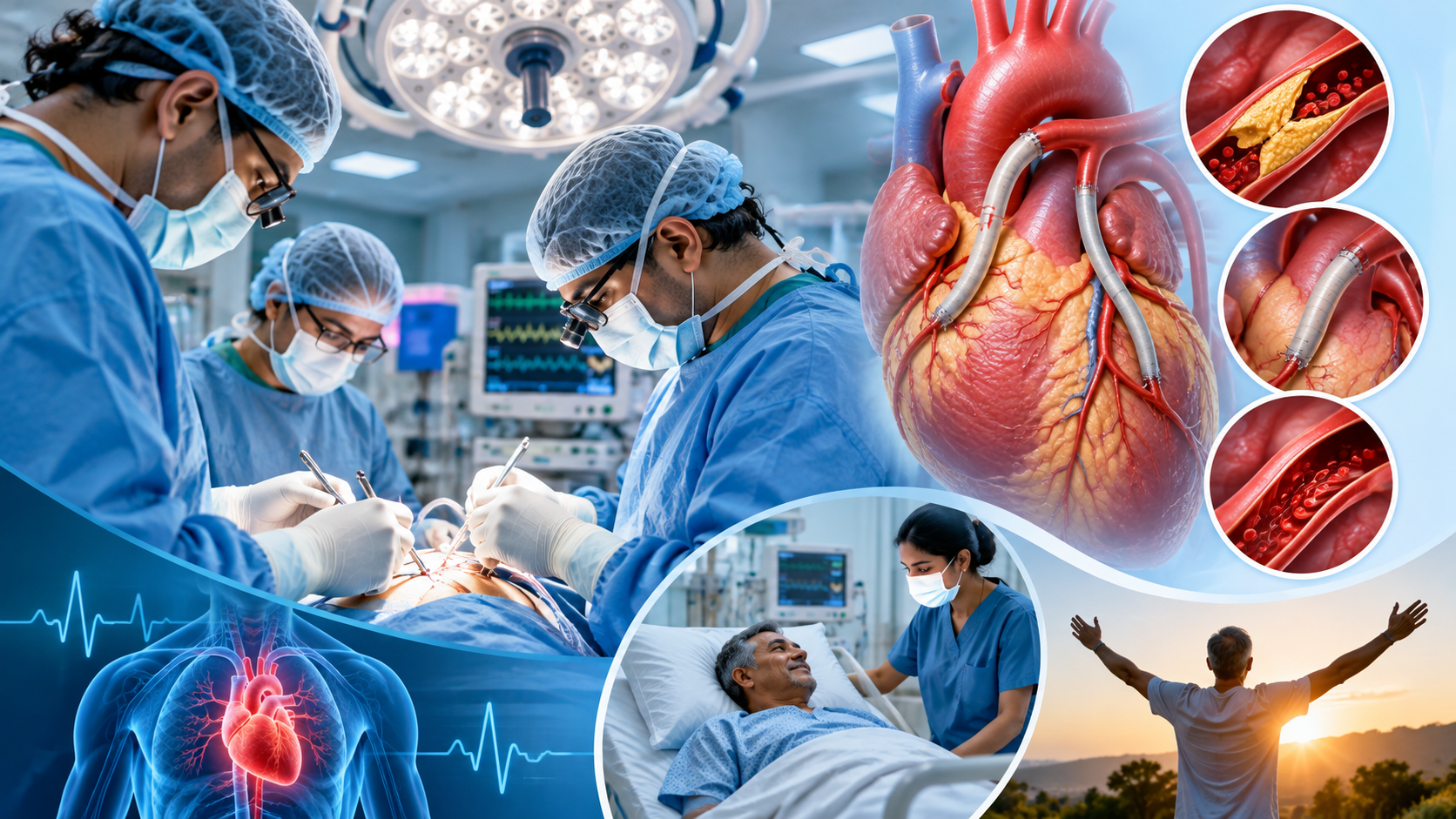
Bypass surgery is rarely the work of a single specialist. Our cardiovascular surgery team works alongside interventional cardiologists, anaesthesiologists, perfusionists, and cardiac critical care nursing staff throughout every stage of a patient's surgical journey, from pre-operative evaluation to post-surgical recovery.
This coordinated approach is particularly important for higher-risk or emergency cases, where close communication between departments can directly affect surgical outcomes.
Why Choose Arunachala Hospital in Kadapa
Cardiac surgery outcomes depend heavily on the depth of a hospital's supporting infrastructure, not the operating room alone. At Arunachala Hospital, our cardiovascular surgery department includes dedicated cardiac operating theatres and a specialised cardiac ICU for post-operative monitoring, along with structured cardiac rehabilitation support.
We also maintain close coordination between our surgical and interventional cardiology teams, so that patients being evaluated for CABG benefit from both perspectives before a final treatment decision is made.
Who May Need Coronary Artery Bypass Surgery
Bypass surgery is generally considered for patients with severe blockages across multiple coronary arteries, significant left main artery disease, or coronary artery disease that hasn't responded adequately to stenting or medication alone. Patients with diabetes and multi-vessel disease are also frequently evaluated for CABG, since surgical outcomes in this group are often more favorable than stenting alone.
The decision between bypass surgery and a less invasive option like angioplasty and stenting depends on the number and location of blockages, overall heart function, and other individual risk factors, which is why a thorough evaluation by both cardiology and cardiac surgery specialists matters before proceeding.
Recovery After Bypass Surgery
Recovery from CABG typically involves a period in the cardiac ICU for close monitoring, followed by a step-down recovery phase and structured cardiac rehabilitation focused on mobility, breathing, and gradual return to activity. Off-pump procedures may allow for a somewhat faster initial recovery for suitable patients, though overall recovery time still depends on the complexity of the surgery and the patient's overall health.
Our post-operative care includes hemodynamic monitoring, infection prevention protocols, and a structured rehabilitation pathway designed to support long-term heart health after surgery, not just immediate post-operative recovery.
How to Plan Your Consultation
Getting evaluated for CABG at Arunachala Hospital begins with a cardiac consultation, including imaging and angiography to assess the extent of coronary artery blockages. Patients are typically referred for surgical evaluation either directly or following an interventional cardiology assessment.
For patients bringing prior angiography results or cardiac imaging, we recommend sharing those reports at your first visit so our team can begin surgical planning without delay.
Conclusion
Coronary artery bypass surgery remains one of the most effective treatments for severe, multi-vessel coronary artery disease, particularly when stenting alone isn't sufficient. At Arunachala Hospital in Kadapa, our cardiovascular surgery team works alongside interventional cardiology and dedicated cardiac critical care staff to support patients through every stage of surgical treatment and recovery.
If you're exploring coronary artery bypass surgery in Kadapa, we invite you to schedule a consultation with our cardiac care team today.